
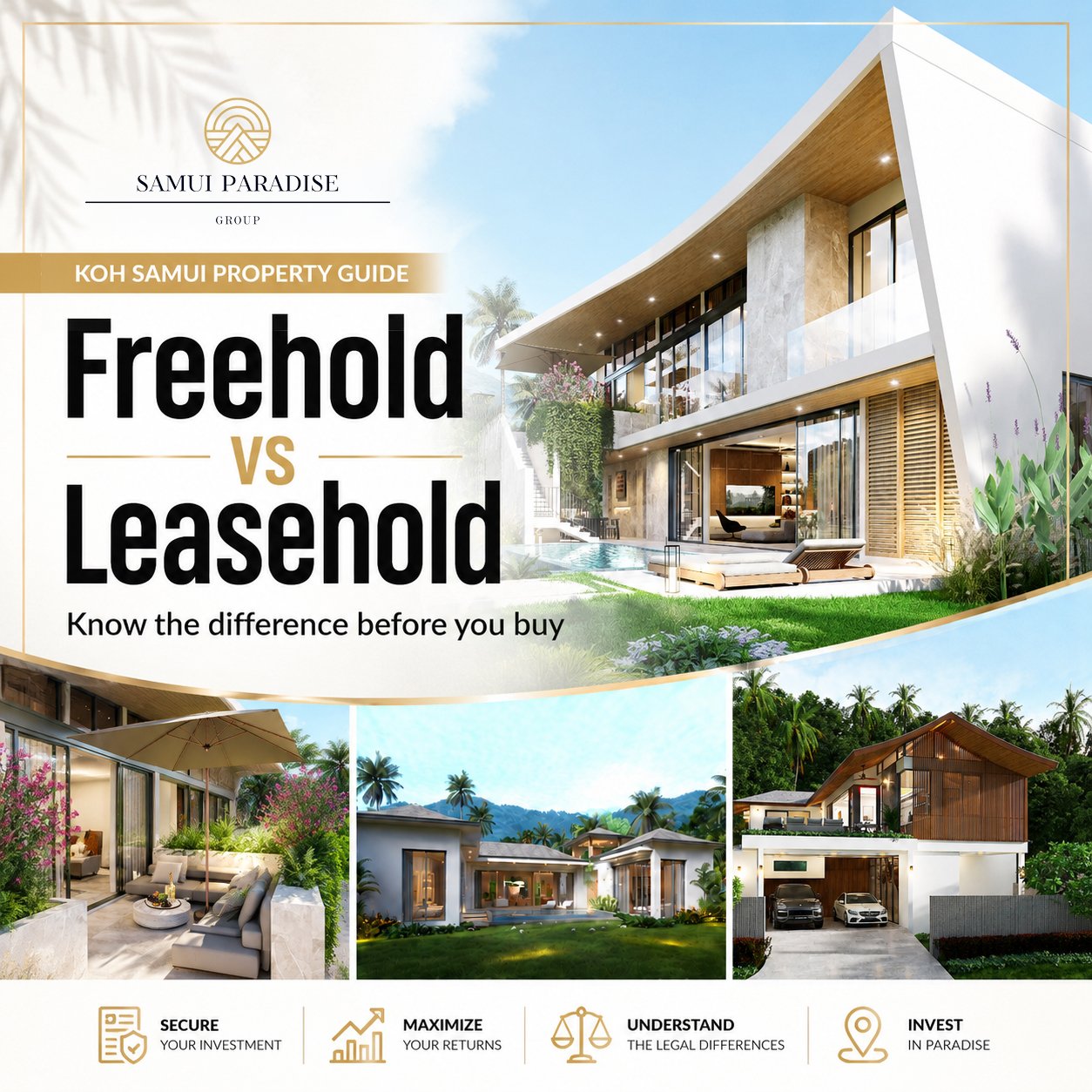
If you’re considering buying a villa in Koh Samui, the ownership structure you choose will affect everything — from your legal rights to your resale value and long-term returns. Yet most foreign buyers don’t fully understand the difference between freehold and leasehold until they’re already deep into the process.
Here’s what each structure actually means, what it costs, and how to decide which one fits your situation.
What Is Freehold Ownership in Thailand?
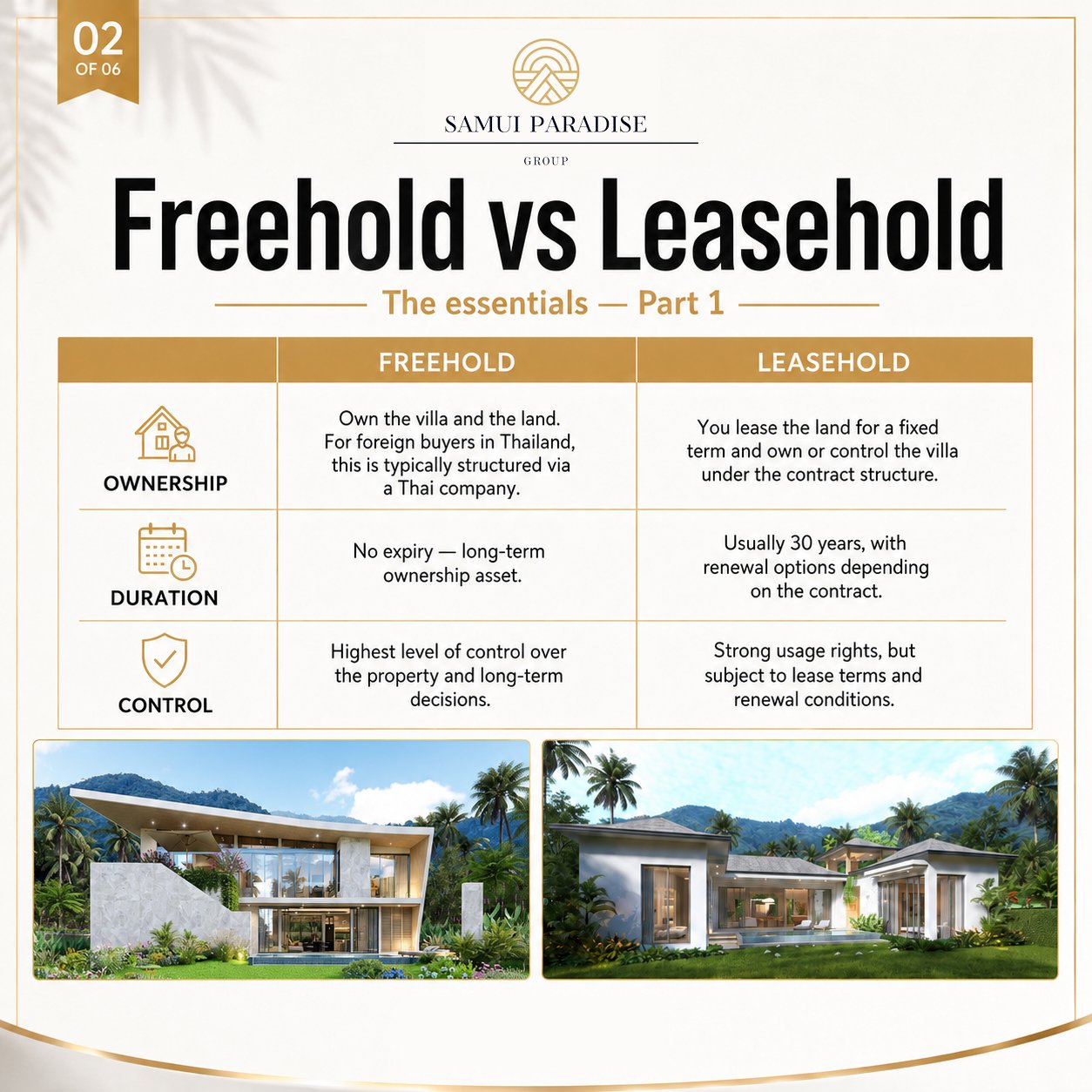
Freehold means outright ownership of the building and, in certain structures, the land it sits on. For foreigners, direct land ownership isn’t permitted under Thai law — but there are legal structures that provide equivalent security.
The most common approach: a Thai limited company holds the land title, and you own the majority of the company. This is standard practice, legally tested, and used by thousands of foreign property owners across Thailand.
What you get with freehold:
- Full ownership rights over the property
- No time limitation on your ownership
- Freedom to sell, transfer, or pass to heirs
- Stronger long-term appreciation — freehold properties in Koh Samui have seen 5-8% annual value growth over the past decade
- Higher resale demand from buyers who prefer outright ownership
Typical price premium: Freehold villas cost 10-20% more than comparable leasehold properties. For a 3-bedroom pool villa in Lamai starting at 6.9M THB, that difference is roughly 700K–1.4M THB.
What Is Leasehold Ownership?
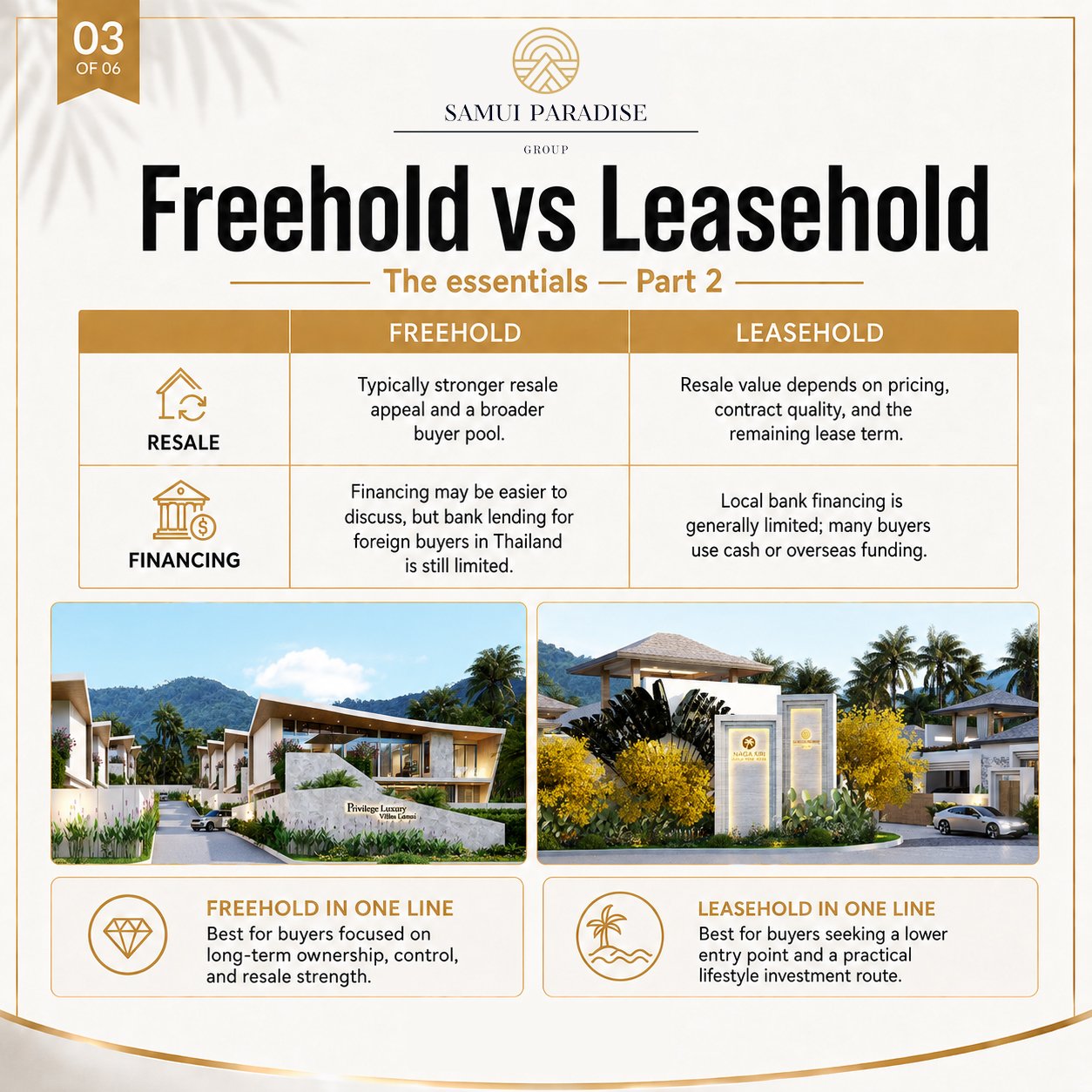
Leasehold means you lease the land rather than owning it outright — but when structured correctly, it provides long-term security that rivals freehold.
At Samui Paradise Group, we provide a safe, secure, and uniquely structured leasehold investment model designed for long-term peace of mind and flexibility. This is not a generic 30-year lease with uncertain renewals — it is a carefully designed ownership framework built by a developer who owns the land and has a direct interest in protecting your investment.
What you get with our leasehold model:
- A secure, legally structured agreement tailored for foreign buyers
- Full use, enjoyment, and income rights over your property
- Long-term peace of mind — the structure is designed for stability, not speculation
- Flexibility to sell, transfer, or restructure during the term
- No complex company formation required — simpler legal setup than freehold
- Direct relationship with the developer-landowner, eliminating third-party renewal risk
Why this matters: Most leasehold concerns stem from buying through brokers or from developers who don’t own the land. When the developer is the landowner — as with Samui Paradise Group — your leasehold is backed by a party with every incentive to maintain the project’s value and your security as an owner.
How to Decide: Freehold or Leasehold?
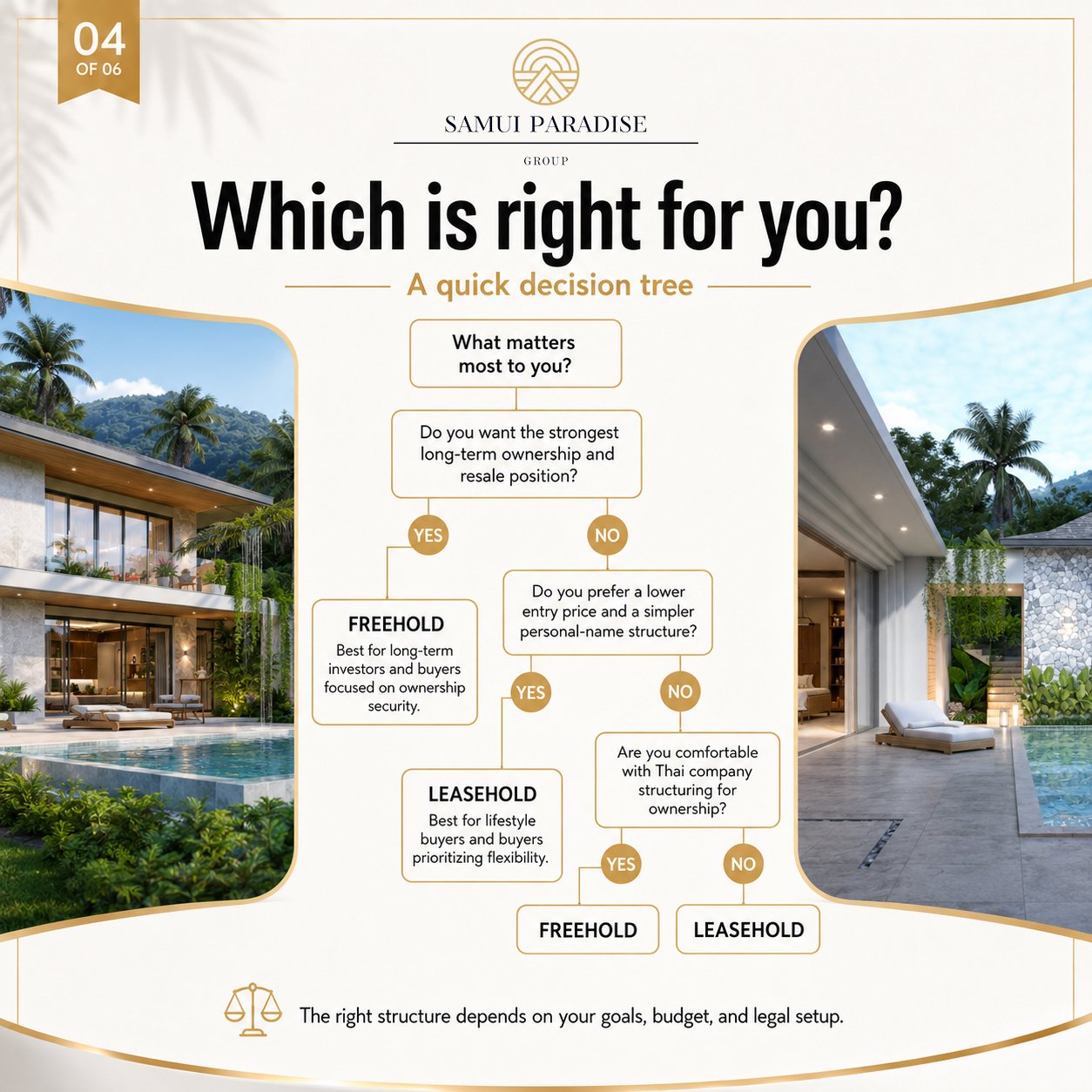
There’s no universally correct answer. The right choice depends on your investment horizon, budget, and goals.
Choose freehold if:
- You’re planning to hold the property for 10+ years
- Resale value and exit strategy are important to you
- You want to pass the property to your children
- You’re comfortable with the Thai company structure
Choose leasehold if:
- You want a secure, structured investment with a lower entry price
- You value peace of mind and flexibility over complex company structures
- You prefer a simpler legal setup with direct developer-landowner backing
- You’re buying for personal use, rental income, or long-term investment with full security
What About Rental Returns?
Both structures generate similar rental yields. A well-managed pool villa in Koh Samui can achieve 6-10% gross rental yield regardless of the ownership type. The difference shows up in capital appreciation over time — freehold properties tend to appreciate faster because buyers in the resale market prefer them.
For context: a 3-bedroom pool villa in Lamai purchased at 7.5M THB can generate 450K–750K THB per year in rental income through platforms like Airbnb and Booking.com during high season (December–April).
The Developer Factor
One detail that most ownership guides overlook: who you buy from matters as much as the structure you choose.
When you buy from a developer who owns the land, builds the villa, and manages the project — rather than a broker reselling someone else’s listing — the ownership structure is set up correctly from day one. Title verification, company formation, lease registration, and contract terms are all handled as part of the purchase process.
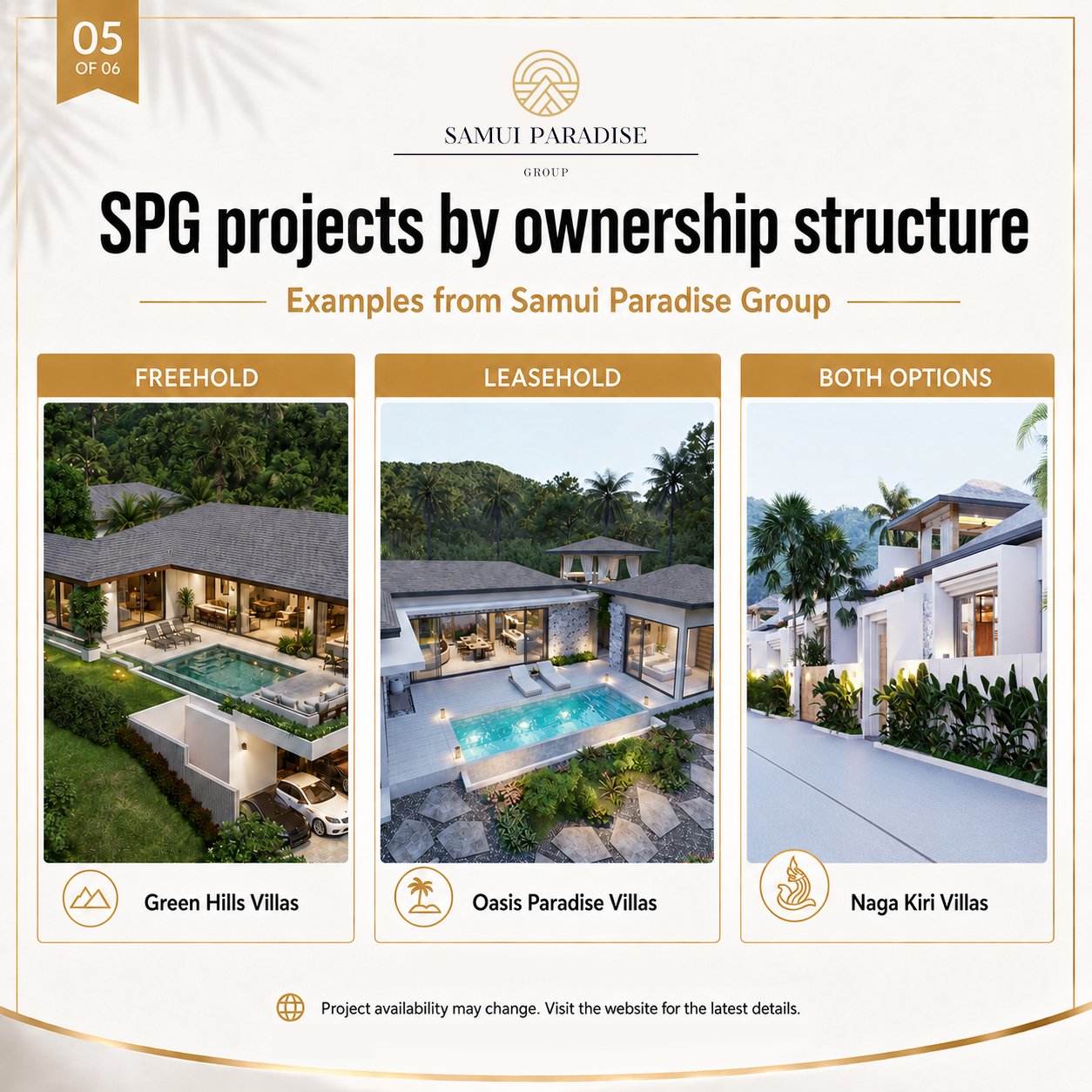
At Samui Paradise Group, both freehold and leasehold options are available across active projects including Privilege Luxury Villas (from 6.9M THB), Naga Kiri Villas (from 7.5M THB), and Whispering Waves. Every buyer receives guidance on which structure fits their goals — not a one-size-fits-all recommendation.
Next Steps
If you’re weighing freehold vs leasehold for a specific property, the best move is a direct conversation with a developer who offers both. Bring your lawyer, bring your questions, and compare the numbers side by side.
Book a consultation at samuiparadisegroup.com or contact info@samuiparadisegroup.com.